

Your Home, Your Terms: How Seniors Can Age in Place With Safety and Ease
/
Image via Freepik
Seniors who want to remain in their own homes as they grow older—often called “aging in place”—are looking for ways to stay safe, comfortable, and independent without giving up familiarity or dignity. The challenge is real: homes built decades ago weren’t designed with today’s longevity in mind. The good news is that thoughtful planning, small adjustments, and the right support systems can turn a longtime home into a place that continues to work well for years to come.
At a Glance: What Makes Aging in Place Work
Staying at home successfully usually comes down to three ideas: reduce risks, conserve energy (yours and the home’s), and plan ahead. When safety features are added early, daily routines simplified, and help lined up before it’s urgent, seniors often report less stress and more confidence. Aging in place isn’t about doing everything alone—it’s about setting yourself up so life feels manageable.
Start With the Home Itself: Common Risk Areas
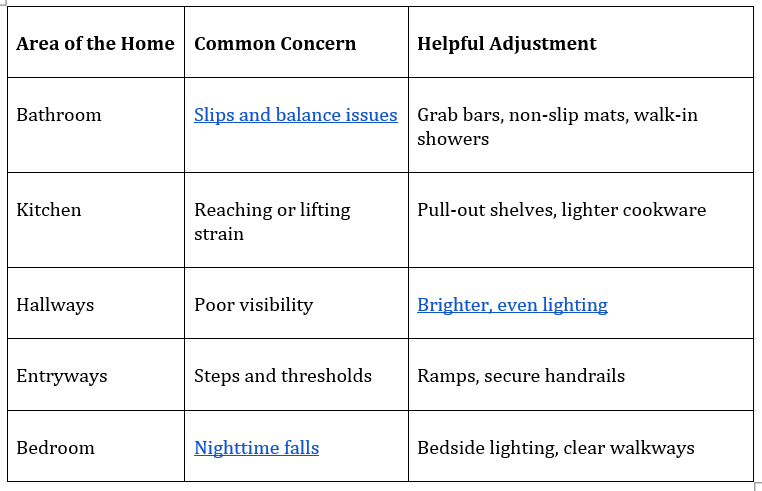
Before making changes, it helps to understand where problems usually arise. Falls, poor lighting, and hard-to-reach controls are among the top issues. The table below highlights frequent trouble spots and practical responses.
A Simple How-To Checklist for Safer Living
Use this checklist as a starting point. You don’t need to do everything at once.
● Check that smoke detectors and carbon monoxide alarms work properly
● Improve lighting in stairways, bathrooms, and entrances
● Remove loose rugs or secure them with non-slip backing
● Install handrails on both sides of stairs if possible
● Keep frequently used items between waist and shoulder height
● Review medications and vision annually with a professional
Even completing a few of these steps can noticeably reduce daily risks.
Daily Habits That Make Life Easier
Not every solution involves construction or spending money. Small habit changes add up:
● Wear supportive, non-slip footwear indoors
● Keep a phone or alert device within reach at all times
● Schedule regular movement, even gentle stretching
● Accept help with tasks that cause strain, such as heavy cleaning
These habits protect energy and prevent minor issues from becoming emergencies.
Smart Appliances and Peace of Mind at Home
Modern, easy-to-use appliances can quietly support independence. Energy-efficient washers, refrigerators with clear controls, and stoves with automatic shut-off features reduce physical strain and lower the risk of accidents. Because appliances are so central to daily routines, many seniors choose to invest in a home warranty that includes appliance protection coverage.
The right coverage can help manage repair costs, cover breakdowns caused by improper installations or repairs, and even include the removal of defective equipment. That kind of backup turns an unexpected appliance failure into a manageable inconvenience instead of a major disruption.
Planning for Support—Before You Need It
Aging in place doesn’t mean refusing assistance. It means choosing support on your own terms. This might include:
● A trusted neighbor who checks in weekly
● A family schedule for calls or visits
● Local senior transportation or meal services
● Occasional help from a home care professional
Knowing who to call—and when—adds a layer of security that’s hard to overstate.
Frequently Asked Questions
Is aging in place safe for everyone?
It depends on health, mobility, and the home environment. With proper modifications and support, many seniors do very well.
When should changes be made to the home?
Earlier is better. Making adjustments before a fall or health crisis is less stressful and often less expensive.
Do small changes really matter?
Yes. Improved lighting, clear walkways, and safer bathrooms can significantly reduce injury risk.
What if needs change over time?
Aging in place is flexible. Homes and support plans can evolve as circumstances do.
Aging in place is not a single decision—it’s a series of thoughtful choices that build on one another. By focusing on safety, comfort, and planning ahead, seniors can remain in familiar surroundings without sacrificing well-being. The result is often greater confidence, steadier routines, and peace of mind for both seniors and their families. Staying home can be a strong, sensible option when it’s done with care.